
Land Clearing Cost Per Acre: What to Budget in 2026
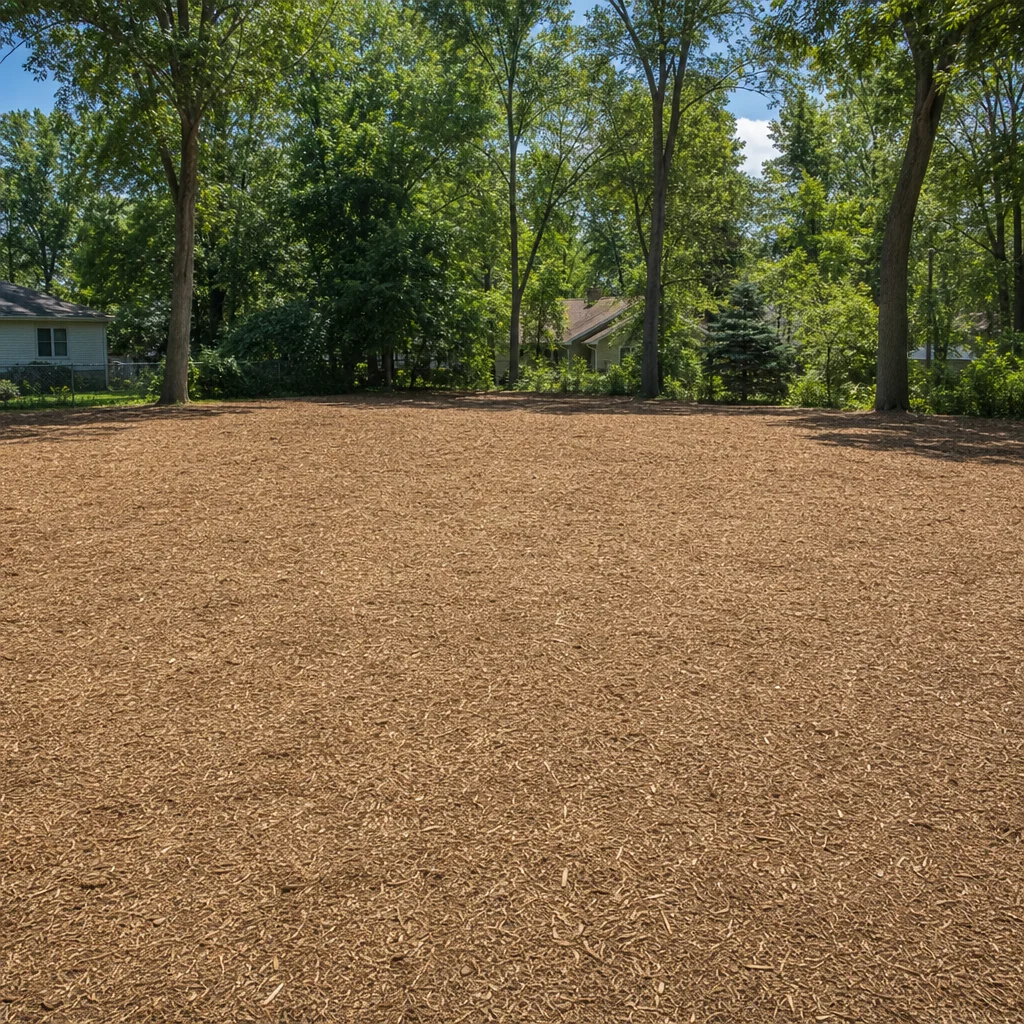
Land clearing costs $1,200 to $8,000 per acre as of 2026, based on national market data. Light brush runs toward the low end. Dense, wooded acreage runs toward the high end. Tree density, stump count, haul-off volume, and site access drive the price more than acreage alone.
How much does land clearing cost per acre in 2026?
| Vegetation density | Typical cost per acre |
|---|---|
| Light brush, grass, small trees | $1,200 to $2,500 |
| Medium brush and mid-size trees | $2,500 to $4,500 |
| Heavy, dense wooded | $4,500 to $8,000 |
| Forestry mulching (any density) | About $400 per acre average, or $150 to $250 per hour |
Not sure which row fits your lot? Light brush means open ground with grass, weeds, and scattered small trees. Medium brush means thicker undergrowth with mid-size trees mixed in. Heavy or dense wooded means a real stand of mature trees growing close together. Most residential lots fall in the light to medium range. Rural or undeveloped acreage tends to run heavier.
These numbers come from two national cost guides, LawnStarter and HomeGuide. They are not a StoneLex quote. StoneLex prices every job after a site walk, looking at lot size, tree density, how many stumps need grinding, how much material has to be hauled off, slope and site access, and whether you want the whole lot cleared or just part of it.
Request a free land clearing estimate to get that walk-through and a real number for your lot.
Why does tree density change the price more than acreage alone?
A one-acre lot with a few scattered trees is not the same job as a one-acre lot packed with mature trees. The acreage is equal. The work is not. Will County, where StoneLex works, carries 17 percent tree and shrub canopy cover county-wide. That is an estimated 21.59 million trees, per the 2020 Chicago Region Tree Census led by the Morton Arboretum. That county-wide share sits in the high teens, but it is not spread evenly. Some south-suburb lots are near-open yard. Others back up to real tree stands. That is why StoneLex prices land clearing after a site walk. A flat per-acre number over the phone would not be honest.
Is forestry mulching cheaper than cut-and-haul clearing?
Often, yes. On a per-acre job, the biggest swing is disposal. Mulching leaves the ground-up wood on the lot, so you skip the disposal cost entirely. Cut-and-haul clearing adds a truck and a dump fee for every load that leaves the site. The same 2020 census found the most common plants in Will County are buckthorn and honeysuckle, not the native sugar maple. Both grow as thick, tangled brush. That tangled growth is exactly what a mulching head is built to grind through, which is one reason StoneLex often recommends forestry mulching over cut-and-haul on a brushy south-suburb lot.
Do you need a permit to clear land in the south suburbs?
It depends on the town. Bolingbrook is one of StoneLex's confirmed service areas. The village publishes a separate Tree Removal Permit tip sheet apart from its driveway and patio permit forms. That means a land-clearing job there can need its own village sign-off, beyond the standard building permit. StoneLex checks each town's rules as part of the site walk. Any extra lead time gets built into your timeline up front, so a permit step does not catch you by surprise partway through the job.
What else drives the price besides acreage?
Five things move the number up or down on any given lot:
- Stump count. More stumps, or bigger stumps, add grinding time. See how stump grinding is priced by diameter for the per-stump breakdown.
- Haul-off volume. Forestry mulching keeps material on site. Cut-and-haul clearing pays for a truck and a dump fee.
- Slope and site access. A tight lot or a steep grade slows the equipment down. That is the same factor that drives excavation and site prep pricing up on a hard-to-reach site.
- Partial versus full clearing. StoneLex can clear just part of a lot and keep the trees and features you want. That selective work costs less than a full clear, but it goes slower because the crew cuts carefully around what you want to keep.
- What is left behind. A cleared site should be ready for the next step. That means no debris piles, no stumps sticking up, and no hidden roots left to cause problems later.
A small residential lot often takes a day or two. A larger or heavily wooded parcel takes longer. Before any of that starts, StoneLex walks the site in person and sets a real timeline, not a guess over the phone.
Book a free land clearing walk-through and find out what your acre actually costs.
Talk to StoneLex
Questions about your excavation & site work job? We serve Orland Park and the surrounding area with honest, upfront advice.
Related articles
FAQ
Related questions
How much does it cost to clear a lot for a new house?
A house lot usually runs on the lower end of the per-acre range, because most residential lots carry less dense tree cover than a rural wooded parcel. Lot size, how many trees come down, and how far debris has to travel still set the final number.
What is included in a free land clearing estimate?
StoneLex walks the property first, counts stumps and tree density, checks slope and site access, and confirms whether you want the whole lot cleared or just part of it. You get a firm timeline and an itemized price before any equipment moves.
Does clearing a lot include stump removal, or is that extra?
It depends on the job. Some land clearing quotes price stump grinding separately by diameter. On a lot where StoneLex is already forestry mulching, stump grinding can often be rolled into the same visit, so you get one itemized price instead of a separate mobilization.